Convention on International Trade in Endangered Species of Wild Fauna and Flora approves new protections for sharks, birds, amphibians and other species
- The nineteenth meeting of the Convention on International Trade in Endangered Species of Wild Fauna and Flora (CITES), also known as CoP19, concluded on November 25 in Panama, after two weeks of negotiations.
- Member States have approved new trade regulations for over 600 animal and plant species, including the protection of sharks, glass frogs, turtles, songbirds, and several tropical tree species.
- Experts say that while these new regulations are essential, the most significant conservation impact will come from their implementation and enforcement.
During the current global biodiversity crisis, member countries have agreed to protect certain threatened species such as sharks, songbirds, glass frogs, and several tropical tree species by regulating their trade.
Over the past two weeks, member states of the Convention on International Trade in Endangered Species of Wild Fauna and Flora, or CITES, met in Panama for their nineteenth meeting, CoP19, to discuss species protection issues. By the end of the meeting on November 25, members agreed to establish new trade regulations or revise existing ones for more than 600 animal and plant species. They also discussed how to best address the illegal trade in species already protected by CITES, such as jaguars, pangolins, and elephants.
Experts say one of the most significant developments this year was the decision to protect sandbar sharks, hammerhead sharks, and violinfish under CITES Appendix II, which restricts trade in certain species by requiring export permits.
Susan Lieberman, vice president of international policy at the U.S.-based Wildlife Conservation Society (WCS), called the decision a “victory,” as these three species account for approximately 95 percent of the global shark fin trade.
"Finally, the vast majority of the fin trade will require legal and sustainable regulation," Lieberman said in an interview with Mongabay. Prior to this decision, some sharks were already listed under CITES, but they represented "a relatively small percentage of the global fin trade," he said.
Other key decisions include the protection of all 160 known species of glass frogs (of the family Centrolenidae), also under CITES Appendix II.
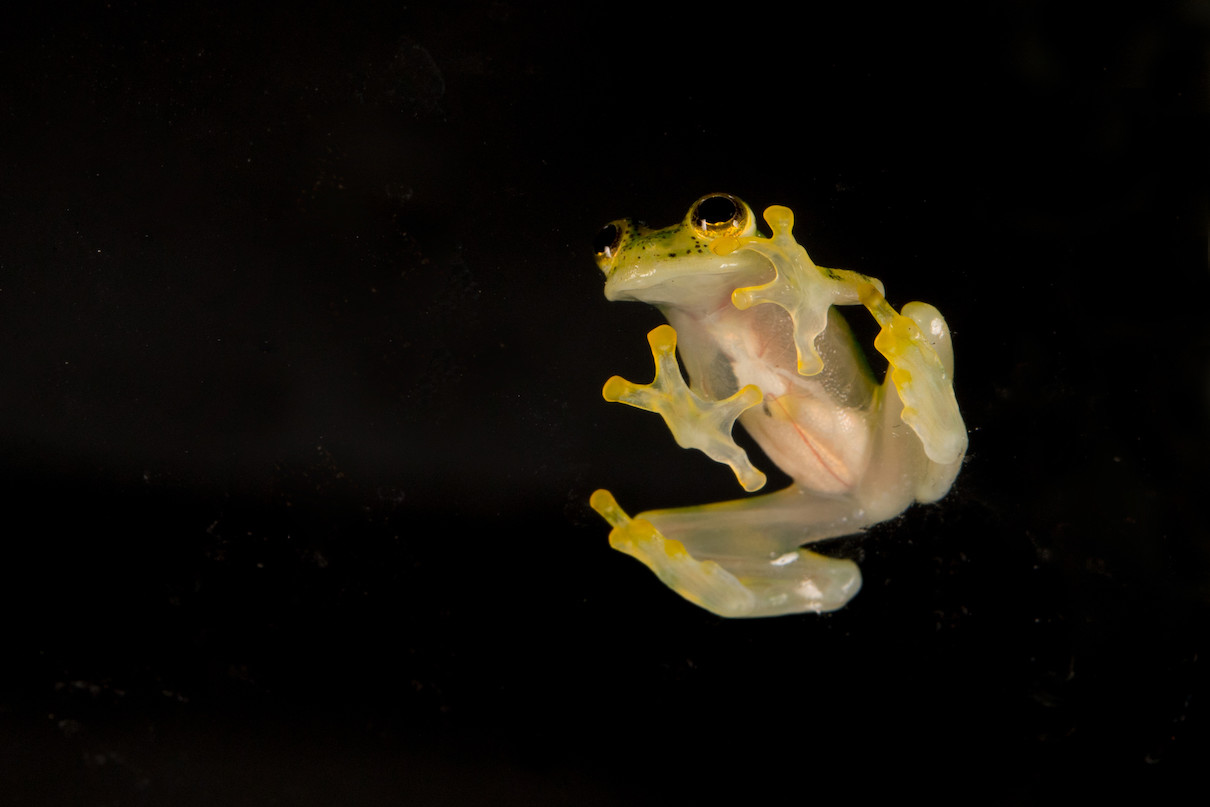
- “These species are in decline precisely because traders are taking them from their habitat to sell them illegally as pets in Europe and the United States,” Lieberman said. “So now that they're part of CITES, [traders] will at least have to obtain a permit, and importing countries will have to monitor it.”
- Freshwater turtles are also regularly sold as pets, and CITES members have agreed to protect 52 species, including both species of matamata turtles ( Chelus fimbriata and Orinocensis ), prized for their rough, knobby shells and flattened triangular heads.
- It was also decided to protect two commonly traded songbird species: the white-rumped shama ( Copsicho malabarico ) under CITES Appendix II and the yellow-headed bulbul ( Pycnonotus zeylanicus ) under CITES Appendix I, which bans almost all trade in highly endangered species.
- “These songbirds are being taken from their natural habitat in an unsustainable way, to compete in song contests, ” Lieberman explained. “It's a good result, but I hope it's not too little, too late.”
- However, the trade in these two songbirds is just “the tip of the iceberg,” Lieberman added, adding that more species will need to be protected under CITES in the future.
- The Asian Songbird Trade Specialist Group (ASTSG) of IUCN, the world's leading wildlife conservation authority, has identified 43 species in urgent need of protection from trade.
- CITES member states also agreed to add more than 140 threatened tropical tree species to Appendix II. The protection of three groups of African species (padpuk, Afzelia quanzensis, and African mahogany) will take effect after 90 days, but the protection of two groups of Latin American species (Dipteryx odorata and Cecropias) will not take effect for another two years.

- “We are pleased with these developments, but at the same time deeply regret the two-year delay for Latin American species,” Colman O'Criodain, wildlife policy and practice manager at WWF International, wrote in an email to Mongabay. “These slow-growing species are currently overexploited, and their listing as protected is urgently needed. A two-year 'holiday' will encourage countries to continue overexploiting for as long as possible.”
- Other key developments included the listing of three sea cucumber species and 25 lizard species in Appendix II, a reduction in the permitted number of leopard hunting trophies exported from African countries, and a general agreement to better monitor trade in species already protected by CITES, including rhinos, jaguars, cheetahs, pangolins, and sea turtles. Voting members also declined to approve proposals by some nations to legalize the trade in elephant and rhino ivory.
- Although CITES CoP19 concluded with many important decisions, not all proposals were adopted. For example, the proposal to list the common hippopotamus ( Hippopotamus amphibius ) in Appendix II, thus banning all exports of wild specimens, was defeated, despite 56 votes in favor and 56 against (a proposal requires a two-thirds majority to pass). Common hippos are targeted by traders for their ivory teeth and other body parts.
- Stephen Carmody, director of programs at the Wildlife Justice Commission, called the failure to protect hippos a “disappointment.”
- “Banning the sale of hippopotamus teeth would have been a step in the right direction because [traffickers] are looking for alternatives to ivory, for example giant clams , mammoth ivory, hippopotamus teeth, similar products that can be used as substitutes,” Carmody told Mongabay.
- Despite the missed opportunity to protect hippos, Carmody said he believes the conference was a success, given the number of trafficked species receiving new protections under CITES. However, he said he expects wildlife crime to remain a problem and that "robust control systems" must be put in place to combat illegal trafficking.
- "There will always be opportunities for crime to interact with commerce (even legal commerce) if these systems aren't robust enough," Carmody said. "They also need to be enforced, so we need regulatory agencies with sufficient powers."
- He also added: “We must not give up and continue moving forward because crime is recurring, and without keeping an eye on innovation and preventing it, we will constantly be behind in tackling these problems.”

- O'Criodain added that a major challenge for international trade in species lies in the implementation of CITES regulations.
- “In the case of sharks and rays, we are still struggling to implement the protections already in place for sharks and rays in some regions, especially regarding catches in the high seas,” he said, “and even more so in terms of the lack of adequate measures by regional tuna fisheries management organizations.”
- Some progress has already been made. Earlier this week, the International Commission for the Conservation of Atlantic Tunas (ICCAT) agreed to adopt a new fishing quota for the endangered shortfin mako shark ( Isurus oxyrinchus ), which was added to CITES Appendix II in 2019. This quota includes a catch limit for the South Atlantic that covers both caught fish and discard mortality, in line with current scientific advice. This measure is estimated to reduce shortfin mako shark fishing by 40–60%.
- “ICCAT's mako safeguards represent a critical step toward closing the problematic gap between countries' obligations under international fisheries and wildlife treaties, thereby eliminating a major obstacle to effective shark conservation,” said Sonja Fordham, President of Shark Advocates International. “We urge all countries to prioritize limiting fishing of CITES-listed shark species.”
- Lieberman concluded by saying that "the good news from CITES is good news for wildlife." However, he added that there is an urgent need to enforce the new rules and that WCS will work with governments and other partners to ensure the successful implementation of these regulations.
- “Biodiversity is collapsing,” he told Mongabay. “We are experiencing three distinct crises: the collapse of biodiversity, climate change, and the pandemic, which is also linked to the wildlife trade and markets. There is still much to be done. In particular, many species are so impacted by climate change that their susceptibility and vulnerability to exploitation is even greater.”
nice
ReplyDelete